Musk's Plan to Build Wafer Fab Reshapes Global Chip Landscape
United Daily News Editorial, October 5, 2026
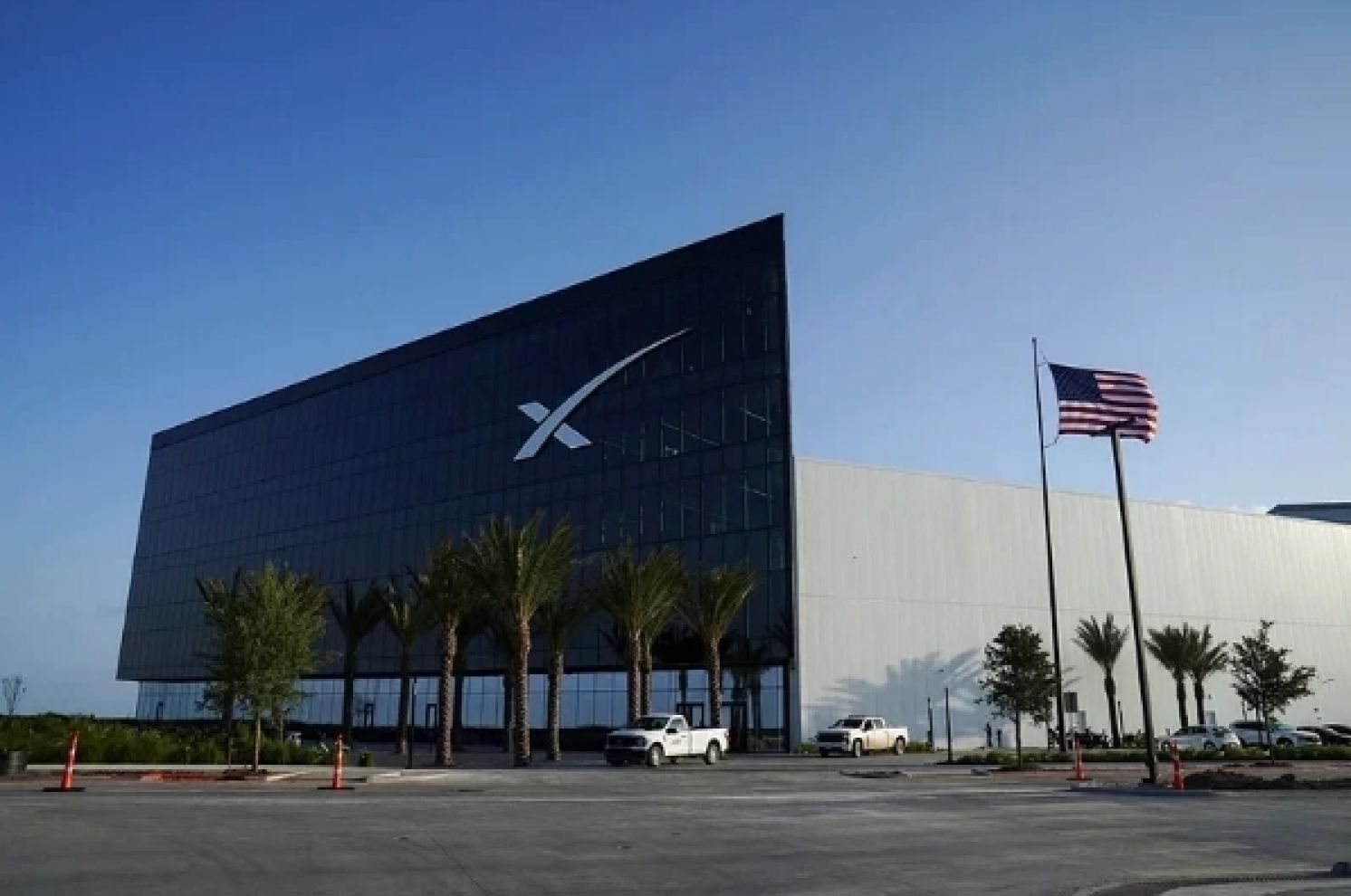
Tesla and SpaceX CEO Elon Musk recently confirmed that his Terafab semiconductor manufacturing project is in discussions with Taiwan Semiconductor Manufacturing Company (TSMC) over potential cooperation. In the past, the semiconductor industry's fortunes were often assessed based on market conditions for smartphones, personal computers, and automobiles. Today, the rules of the game have changed. Artificial intelligence (AI) data centers have emerged as a new source of demand, driving rapid growth in demand for GPUs and high-bandwidth memory (HBM), while increasing the need for advanced manufacturing and packaging capacity.
This is also the backdrop to Mr. Musk's ambition to build Terafab. His businesses span autonomous vehicles, robots, satellites, and large-scale AI computing centers, all of which require enormous quantities of chips. Traditionally, technology companies designed chips and outsourced production to semiconductor foundries. Now that demand has reached a certain scale, chip buyers are beginning to consider whether they can control their own manufacturing capacity.
However, building a semiconductor fab is entirely different from constructing a data center. The most difficult thing to acquire in the semiconductor industry is manufacturing process expertise. If Terafab ultimately requires TSMC's assistance, then it would further demonstrate that TSMC's most valuable asset is not its factories, but its manufacturing capabilities, embedded in thousands of production processes, supplier management practices, and engineers' accumulated experience.
Another driving force is politics. The United States has long been dissatisfied with the heavy concentration of the world's most advanced chip manufacturing in Asia. President Donald Trump has gone further, explicitly linking semiconductor manufacturing to national security, tariffs, and American manufacturing. Even if producing a chip in Taiwan is cheaper, political costs will enter the pricing equation whenever the U.S. government or customers demand that it be manufactured in the United States.
TSMC's expansion into the United States is not simply a matter of "industrial relocation." It is more akin to a new insurance system for the global semiconductor industry, placing some production capacity closer to customers and accepting higher costs in exchange for market access, security, and political trust. There are, of course, trade-offs. The more overseas fabs TSMC operates, the greater its capital expenditures and management challenges become, while Taiwan's existing industrial clustering advantages may also be diluted.
Taiwan's most likely mistake would be to make "keeping TSMC in Taiwan" its sole objective. If TSMC cannot follow its customers, Samsung, Intel, and other competitors will eagerly accommodate them. The real concern should be whether Taiwan can continue to serve as TSMC's most important base for research and development, talent, and advanced manufacturing processes.
Factories can be built, but a comprehensive industrial ecosystem is much harder to replicate. Taiwan possesses a dense network encompassing wafer fabrication, IC design, packaging and testing, materials, equipment maintenance, and engineering talent. When equipment breaks down in the middle of the night, engineers and suppliers can quickly be found to resolve the problem. Such responsiveness rarely appears in financial statements, yet it represents one of the most valuable competitive advantages of Taiwan's semiconductor industry.
Taiwan should pay greater attention to where next-generation manufacturing processes are developed, where the first mass-production facility is located, whether the most talented engineers are willing to remain in Taiwan, and whether advanced packaging technologies and new materials can continue to emerge from Taiwan. As long as the most difficult, pioneering, and engineering-intensive work remains concentrated in Taiwan, overseas expansion could even strengthen the global influence of Taiwan's semiconductor industry.
The semiconductor industry of the future may no longer pursue a single global supply chain optimized for the lowest possible costs. Instead, several manufacturing clusters may emerge, interconnected yet maintaining a safe distance from one another. The United States dominates AI chip design, software, and major customers; Taiwan possesses the strongest semiconductor foundry capabilities; South Korea holds advantages in HBM and memory; Japan is working to rebuild its materials, equipment, and manufacturing industries; and China is investing enormous resources to catch up in developing an independent supply chain.
Consequently, chips have evolved from commodities into instruments of national power. Those capable of designing the best AI chips, manufacturing them reliably, and supplying sufficient electricity to data centers may gain a decisive voice in the next phase of technological development. Semiconductor companies are also finding it increasingly difficult to remain insulated from politics, because the location of every new factory could influence policy calculations in Washington, Beijing, Tokyo, Seoul, and Taipei.